Ask a Venetian and the answer is immediate: Marco Polo was born in the city of canals, baptised in its parish records, buried at San Lorenzo. Ask someone on Korčula and you’ll get a different answer, delivered with equal confidence, and a street named Depolo to back it up. The Venetians Odyssey rides directly through the middle of this argument: Venice to Dubrovnik, 668km along the Adriatic coastline the Venetian Empire held for eleven centuries. It passes through both claims without settling either.
The case for Venice is the conventional one. Most historians place Polo’s birth there in 1254, and the documentary trail after his return from the Mongol court is Venetian: his capture by the Genoese, his dictation of The Travels to a fellow prisoner while jailed, his burial at the Church of San Lorenzo, which the tour visits on its first day. What’s thinner is any record from before that: no baptismal entry, no contemporary document placing the infant Polo anywhere at all.
The case for Korčula rests on a different kind of evidence: family names, not birth certificates. A 15th-century chronicle, the Chronicle of Venetian history since its beginning until 1446, is cited as the earliest suggestion that the Polo family had Dalmatian roots. On Korčula itself, the surname appears in local records from at least 1400: a land grant that year references a house belonging to one “Bogavaz Dupol,” and in 1430 a Mate Polo petitioned the town council for shipyard ground “near the place where his great-grandfathers had built their ships.” Shipbuilding registers from the following centuries list Polos and Depolos by the dozen. What none of this does is put Marco Polo himself, or his father Nicolo, in Korčula in 1254. The genealogy is real; the birth is inferred.
The building tourists visit as Marco Polo’s house doesn’t help the case as much as its postcards suggest. The stonework itself postdates Polo’s death by three hundred years. It’s a 17th-century structure said to stand on the site of an earlier Depolo home. Korčula’s town authority has spent recent years restoring it into a proper interpretive centre rather than the half-open ruin earlier visitors described, but the building’s age is not in dispute even among people who favour the Korčula theory. What is arguable is only the older structure it may have replaced, and no excavation has produced anything conclusive there.
None of this needs resolving to make the ride worth doing, and the ambiguity is, if anything, the more honest story to tell from the saddle. Korčula was Venetian territory throughout Polo’s lifetime, and a Venetian citizen born on a Venetian-administered island would still have been recorded, and would have thought of himself, as Venetian. The distinction between “Venetian” and “Croatian” as identities didn’t exist in 1254 the way it does now; both claims are really arguing about a place, not a nationality that hadn’t yet been invented.
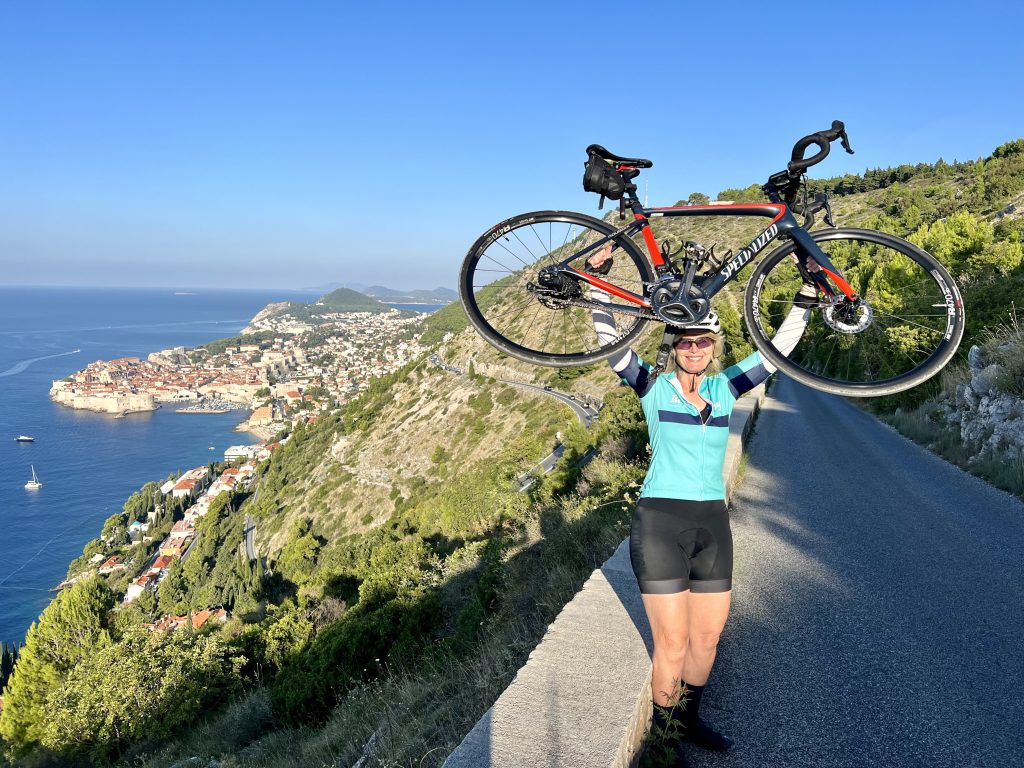
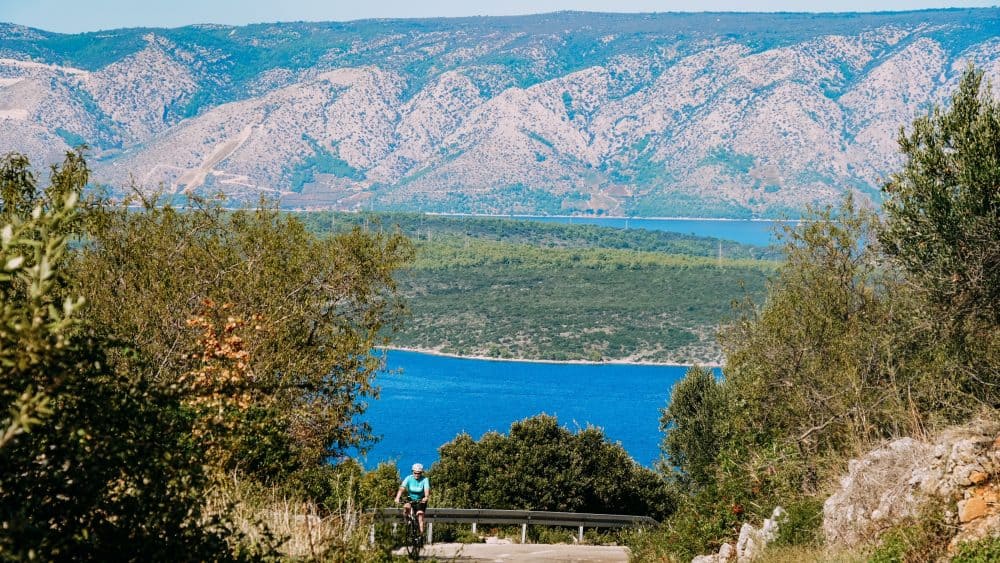
The route makes the geography of the argument obvious in a way no article can. Out of Venice, we ferry across to Piran, then ride inland to Motovun, where two nights at a hilltop wine estate sit above the marble streets Venice once administered. From there it works south through the Dalmatian islands to Split, where Diocletian’s Palace anchors a city built literally inside a Roman emperor’s retirement compound, then on to Hvar’s ancient theatre and a boat crossing to Korčula itself: the island, the old town, the disputed house, the shipyards where Polos and Depolos cut timber for centuries. The tour’s final stretch runs to the 13th-century defensive walls at Ston, among the longest fortifications standing in Europe, before finishing in Dubrovnik, once Ragusa, a Venetian rival more than a Venetian subject.
Riders on the Venetians route get both sides of the story delivered in the order the geography allows: San Lorenzo’s quiet certainty at the start, Korčula’s contested claim two weeks and several hundred kilometres later. Whether Polo was born under the winged lion in Venice or the more modest stone of a Dalmatian shipbuilding family, the empire he served, and the coastline that carried his family’s name for five centuries either way, is the same one this tour follows start to finish.
Ready to ride this incredible odyssey? Take a look at Venetians Odyssey – Venice to Dubrovnik on our website for the full itinerary.