Wednesday, July 2, 2026 Day 23 – Clervaux to Trier – 56 miles with 3600’ of elevation gain
After a rigorous climb out of the city of Clervaux we enjoyed a mostly flat ride along the border between Luxembourg and Germany. It was a pleasant ride on the Luxembourg side of the Our River in the Our Valley. The River Our is, like many other rivers in Europe, the natural border between these two countries.
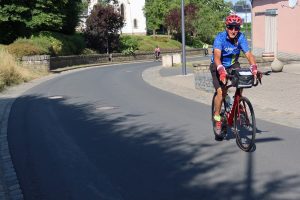
The roads in Luxembourg are fantastic, likely freshly paved roads with no imperfections on them. Since it is a small, rich country, they pave their roads every two years. Notice how smooth the road is in this picture.
Our morning coffee break this morning was in the picturesque village of Vianden, Luxembourg, the hometown of Victor Hugo, the author of “The Hunchback of Notre Dame.” As we entered the village, we saw a magnificent castle on the top of the hill but we didn’t take the time to go to it.
Soon afterwards, we crossed into Germany and biked along the German side of the Our river on a very pleasant bike path, called the piste cyclable des Trois Rivières through more medieval villages and hamlets.
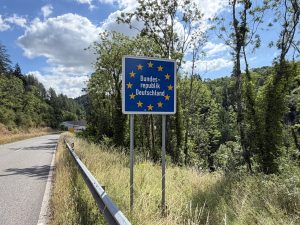
Most of the 3600 feet of climbing occurred after lunch with seemingly interminable hills with grades reaching as high as 12%. Finally, after going through a maze of turns, we arrived in the City of Trier, one of Germany’s oldest cities. Trier has an astounding nine UNESCO World Heritage sites.
A specialized agency of the United Nations, UNESCO stands for United Nations Educational Scientific and Cultural Organization. Started shortly after the end of WWII, it recognizes sites of significant cultural and historical significance. Sites are recognized for their outstanding universal value to humanity, meaning they are considered important not just to the country where they are located, but to all people worldwide.
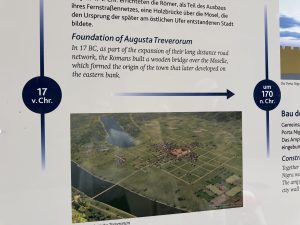
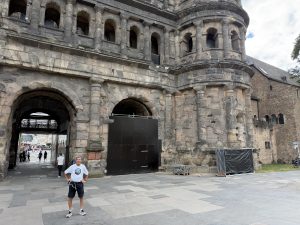
I didn’t have time to go to all of them, but I did go to Porta Nigra, Trier’s most famous landmark. For you logophiles, Porta Nigra is Latin for “black gate.” It is called Porta Nigra because it has become blackened by time, hence the name. It is a marvel of engineering, since it’s held together by nothing but gravity and iron clamps. Amazingly, the foundation for it was laid in 17 B.C.
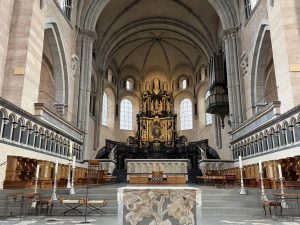
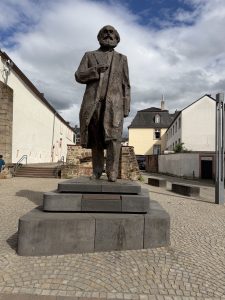
I also went to a magnificent church, Germany’s oldest Gothic church, and saw a statue of Karl Marx because Trier was his birthplace. 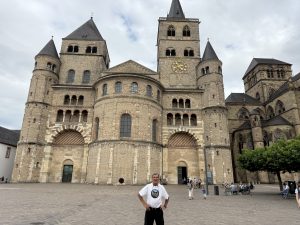
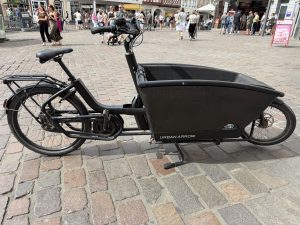
Much like the rest of Europe, bicycling is a way of life here and people have modified bikes to meet their many needs.
Leave a Reply